
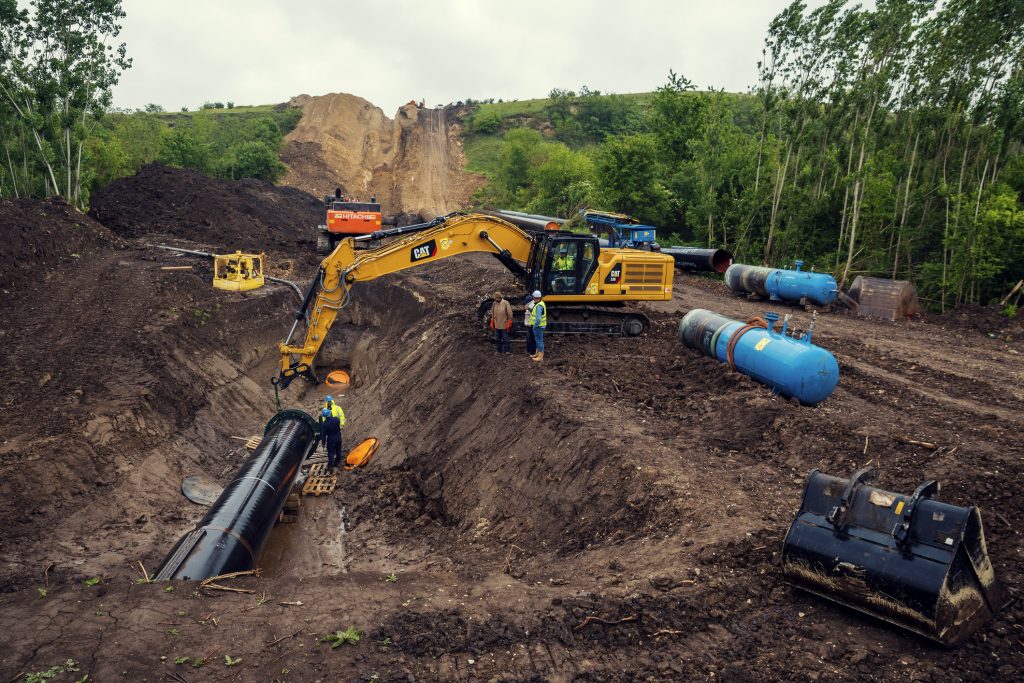
What Types of Underground Utilities Can Be Located?
Professional underground utility locating can identify many types of buried infrastructure, including electrical cables, gas lines, water pipes, sewer systems, communication cables, septic piping, and certain underground structures. The ability to locate a particular utility depends on its material, depth, accessibility, and surrounding ground conditions.
For homeowners and contractors throughout Eastern Pennsylvania, identifying these systems before excavation is an important part of planning safer construction and property improvements.
- TL;DR
- Electrical, gas, water, sewer, communication, and septic lines are common targets for utility locating.
- Different technologies are used depending on the material and characteristics of the underground utility.
- Not every buried object can be detected, making site evaluation and proper excavation precautions important.
Understanding Underground Utility Detection
At Eastern Area Locating, we help homeowners, contractors, and businesses identify buried electrical lines, communication cables, pipes, gas lines, and other underground structures. Learn how our specialized locating equipment and detection methods help uncover hidden utilities, support excavation planning, and reduce the risk of damage.
Can Underground Electrical and Communication Lines Be Located?
How Are Underground Water, Sewer, and Septic Pipes Found?
Can Gas Lines and Underground Storage Tanks Be Located?
What Determines Whether an Underground Utility Can Be Detected?
Locate Underground Utilities Before Your Next Project
Whether you’re planning residential improvements or preparing a commercial construction site, understanding what lies underground can help reduce unnecessary risks. We provide utility locating, pipe locating, GPR, and related detection services throughout the Lehigh Valley and surrounding areas. Contact Eastern Area Locating to discuss your underground locating needs.
Frequently Asked Questions
At Eastern Area Locating, we use specialized equipment to help identify underground utilities without unnecessary excavation. Our FAQs explain how plastic pipes and buried lines can be detected, how utility depths are estimated, and what factors may affect locating accuracy.
Sometimes. Plastic pipes are more difficult to detect using conventional electromagnetic methods, but GPR or compatible tracing techniques may help under suitable conditions.
Some locating methods can provide estimated depth information, but accuracy depends on the equipment, utility characteristics, and site conditions. Estimates should not be treated as guaranteed excavation clearances.
Many utilities can be investigated using non-invasive locating technologies. However, some situations may require additional verification when detection results are uncertain.
